
Side by side
India and Egypt, point by point.
| Aspect | India | Egypt |
|---|---|---|
| Production (2022) | 3.21 million tonnes | 0.40 million tonnes |
| Season | Harvested late spring to early summer | Green garlic from late February, dry garlic from April, through to October |
| Types | White garlic | White, and red or purple |
| Main markets | Bangladesh (about 80% in 2023), then Malaysia, Vietnam and the UAE | The EU (19,555 t in 2025, nearly double 2024), Spain, Brazil |
Buying garlic from Egypt: what to know
- Egyptian garlic entering the EU falls under the same tariff-quota system as other non-EU origins.
Indian garlic from us
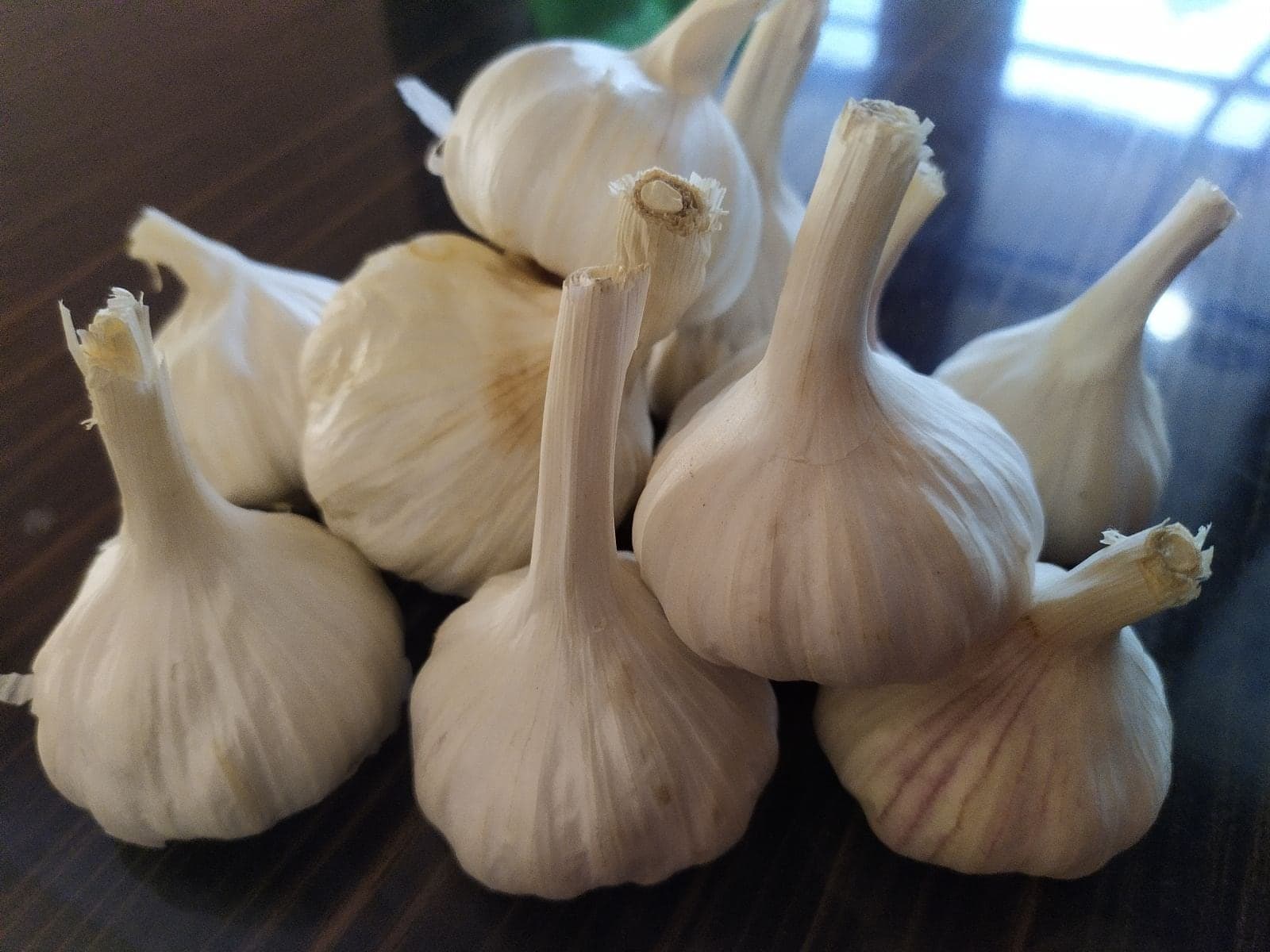
Fresh white garlic, sorted by bulb size. Four sizes cover the range organised buyers usually ask for, from 27–32 mm up to 42 mm and above. From Kota, Rajasthan.
| Size | Bulb size |
|---|---|
| AA | 27–32 mm |
| AAA | 33–37 mm |
| AAAA | 38–42 mm |
| Bom | 42 mm+ |
Questions
Quick answers.
What is the difference between Indian and Egyptian garlic?
Egypt grows a fraction of India's garlic but is a fast-growing exporter to Europe, with a season that opens in February. India's garlic goes mostly to Bangladesh, Malaysia and the Gulf.
How does Indian garlic compare with Egyptian on production (2022)?
India: 3.21 million tonnes. Egypt: 0.40 million tonnes.
How does Indian garlic compare with Egyptian on season?
India: Harvested late spring to early summer. Egypt: Green garlic from late February, dry garlic from April, through to October.
How does Indian garlic compare with Egyptian on types?
India: White garlic. Egypt: White, and red or purple.
How does Indian garlic compare with Egyptian on main markets?
India: Bangladesh (about 80% in 2023), then Malaysia, Vietnam and the UAE. Egypt: The EU (19,555 t in 2025, nearly double 2024), Spain, Brazil.